Question-led planner
inline rf attenuator decisions still open on the brief
- Name the barrel
- Name the heat path
- Name the evidence
- Then compare
Question-led planner
| Stage | Still open until written | Do not accept yet if |
|---|---|---|
| Form | Inline coaxial barrel versus a PCB pi network or a switched box | The quote only says attenuator |
| Heat | Body size, average watts, ambient, and whether a heatsink is included | Power is a single watt number with no temperature |
| Ports | Connector pair, gender, and impedance at each end | One end is SMA and the other end is unnamed |
| Evidence | Datasheet revision, VSWR band, attenuation tolerance | The curve belongs to a different wattage |
| Commercial | Quantity, currency, Incoterms, freight, destination, timing | A sample price is treated as the release price |
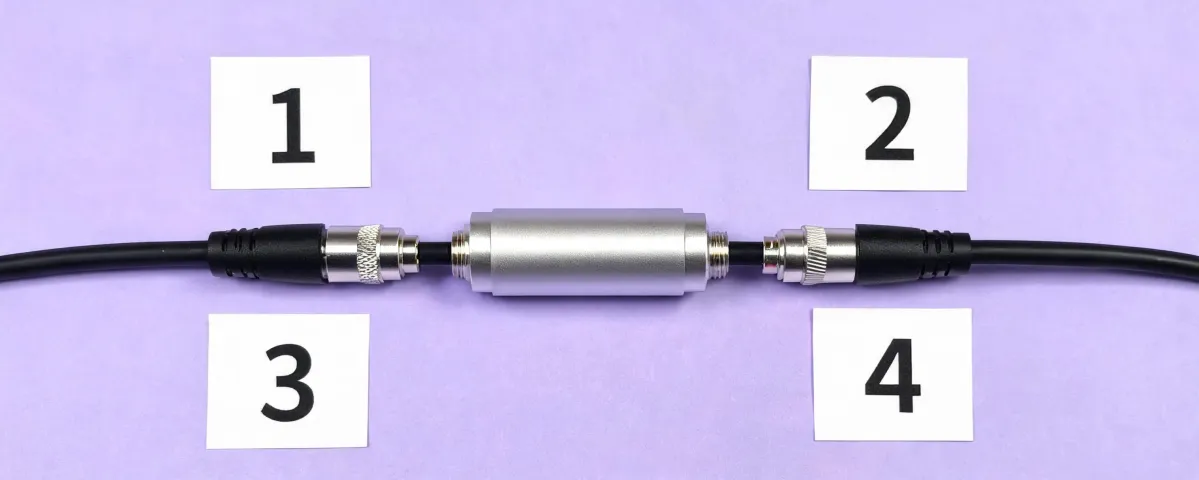
An inline rf attenuator is the coaxial part that sits in the cable run, with a connector on each end. Heat leaves through the metal body. That is a different thermal path from a PCB pi network, where copper area does the work. If the job is a mast-mounted radio, say whether the barrel is inside a sealed boot and what ambient the boot reaches. Ingress protection, if required, applies to that sealed assembly on the drawing, not to every hex nut in the family.
Alternates need a written deviation. A 6 dB barrel is not a silent substitute for 10 dB. A 75 ohm inline part is not a silent substitute for 50 ohm. A 2.92 mm barrel discussed toward 40 GHz is not a silent substitute for an SMA barrel discussed toward 18 GHz. Ask the supplier to mark compliant, deviation, or optional on each line. A matching hex size does not prove the resistor value inside.
Acceptance can be document review first, then an incoming check the buyer defines: connector gauge, continuity or DC block as specified, and a sample return-loss measurement if the buyer own lab will run it. This planner does not perform that measurement. It only lists the checkpoint. Connector mating cycles should cite the sequence the maker used. A round number without a method is still an open cell.
Ask whether the date is the factory dock or the US address you named. Partial shipments of mixed dB values should be refused in writing if your kit needs matched attenuation. Protective caps and the torque note for the coupling nut travel with the barrel or they are missing scope. A 25-piece pilot can be a different plating lot from a 300-piece release. State both quantities if both exist.
Refurbished inline barrels are a separate offer. They can address a discontinued body when pin condition, remaining mate cycles, and paperwork are shown. New barrels can show a clearer date code. Choose after those files exist. The planner does not rank plants. High-end, mid-range, budget, or undecided is only the preference you may add on the form.
When the cells above are filled, move to the inquiry labels to pick a family name, then to the requirement form for quantity and destination. The procurement brief restates the attribute list in article form. Nothing on this planner is a carbon, forest, or net-zero statement. The subject is the barrel in the cable.
Record the open cells in the text: barrel versus board, watts and ambient, both connectors, evidence list, quantity, destination, and timing. Compare replies only after those cells match.
Qualified briefs can include sourcing support of up to 3%.
Eligibility applies to qualified business buyers and is confirmed after we review your product, quantity, destination, and sourcing requirements.
Prepare a Telecom RFQ